
 Download on iOS
How to Tell If a Sports Jersey Is Authentic, and What It's Worth
Most fake jerseys give themselves away in the stitching, collar logo and tags. Here is how to check a jersey, tell the tiers apart, and price it from real sold listings.
Quick answer: To tell if a sports jersey is authentic, check how the name and numbers are applied, the quality of the stitching, the collar logo, the jock tag and the inside labels, then compare everything to a known-real example of the same version and season. A price that looks too good to be true is the biggest warning sign. Value depends on the version (fan replica, mid-tier or on-field authentic), the player, the era, condition, and whether it was signed or worn in a game with documentation to prove it.
Jerseys are one of the most common things people find in closets, thrift racks and estate sales. They are also one of the most faked items in sports. The good news is that real jerseys follow consistent patterns, and once you know what to look for, most fakes are easy to spot. This guide walks you through the checks, explains the different tiers, and shows you how to price what you have.
First, know which kind of jersey you have
"Authentic" means two different things in the jersey world. It can mean the jersey is a real licensed product and not a counterfeit. It can also be the name of a specific tier, the closest copy of what players wear on the field. Brands sell several tiers at once, so a real jersey can still be the cheaper fan version.
In the NFL, Nike has held the license since 2012 and sells three main tiers:
- Game: the most common fan version. Names, numbers and logos are printed onto the fabric.
- Limited: a step up. Current Limited jerseys use heat-applied twill names and numbers, so they have a raised fabric look without stitching.
- Elite: the on-field version, with stitched twill numbers and a closer athletic fit.
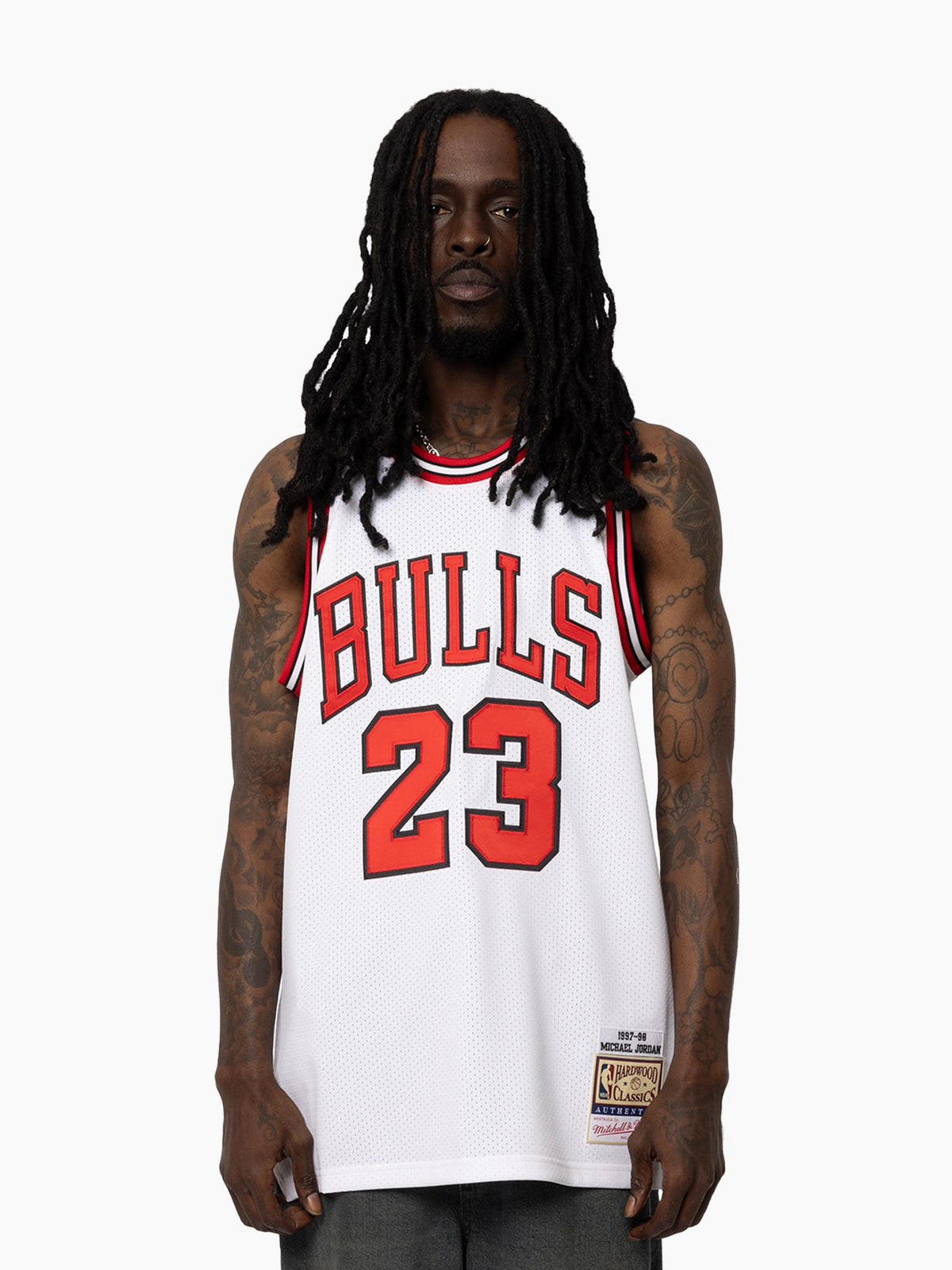
Basketball works the same way. Nike took over the NBA license in 2017. Before that, Champion made popular NBA replicas through much of the 1990s. Mitchell & Ness sells throwback "Swingman" jerseys with printed twill lettering and a roomier fit, plus "Authentic" versions that recreate the on-court jersey, including its fabric, tighter fit and the original lettering method for that era.
A quick test from vintage jersey dealers: if the letters and numbers feel flat when you rub them with your thumb, it is a printed replica. Raised edges usually mean a twill swingman or authentic. The print method should also fit the era. A screen-printed jersey from the 2000s that a seller calls an on-field authentic is a red flag.
How to tell if a jersey is real or fake
Counterfeiters cut corners in the same places over and over. Work through these checks with good light and, if you can, a photo of a known-real jersey of the same team, season and tier open next to you.
- Price and seller. A brand new "on-field" jersey selling for a small fraction of retail is almost always fake. Be wary of listings with only tight, cropped photos or stock images.
- Stitching. Real stitched numbers have clean, even, tight stitching with no loose threads, puckering or wavy edges. Look at the inside too. Messy backing and crooked rows are common on fakes.
- Lettering and fonts. Every team has its own font, colors and number outlines. Compare the shape of each digit and letter, the spacing of the name bar, and how centered it all sits.
- The collar logo. On NFL jerseys, the shield at the neck should look crisp and sit straight. Fakes often have a flat, blurry or shiny shield, or one that is the wrong size or slightly off center.
- The jock tag. This is the small tag near the bottom hem. On real jerseys it is neat, sized correctly and placed where it should be for that tier. Fakes often place it too high or use a flimsy tag that bends easily.
- Inside labels and holograms. Compare the neck labels, size markings and any hologram stickers to official examples. Counterfeiters struggle to copy holographic tags cleanly.
- Fabric and fit. Real jerseys use the right weight of mesh or knit for their tier. A jersey labeled as an on-field version that feels thin and stiff, or fits like a cheap T-shirt, deserves a second look.
No single check proves anything. One odd detail can happen on a real jersey. Several odd details together usually mean a fake.
Vintage jerseys: dating and spotting reissues
For older jerseys, the maker's tag is your best dating tool. In hockey, for example, CCM and Koho jerseys point to the 1980s through the early 2000s, Reebok ran from 2005 to 2017, Adidas from 2017 to 2024, and Fanatics took over after that. Anniversary and championship patches can help pin down a single season.
Watch out for reissues. A throwback made recently is still a real licensed product, but it is not an original from that season. Originals usually carry a collector premium, so check the tags and listing for words like "throwback," "reissue" or "Hardwood Classics." If a jersey has no name or number, look for ghost outlines, glue marks or stitch holes that show lettering was removed.
What makes a jersey valuable
Most retail jerseys sell used for well under what they cost new. A few things push value up:
- Tier. On-field authentic versions usually resell for more than fan replicas of the same player.
- Player and moment. Hall of Famers, rookie seasons, championship years and fan-favorite players sell best.
- Era and rarity. Original vintage jerseys, defunct teams and short-lived designs can draw strong interest, especially in larger sizes and clean condition.
- Condition. Holes, cracked printing, loose numbers, stains and pit discoloration all cut value. Tags attached are a plus for newer jerseys.
- Autographs. A signature only adds value when it comes with authentication from a respected third-party company. An unverified signature can make a jersey harder to sell.
Game-worn jerseys are a different market
Jerseys actually worn in games are where the big money is, and proof is everything. Major League Baseball runs its own authentication program, where authenticators witness items being used or signed and then apply a tamper-evident hologram with a unique serial number you can look up on MLB.com. Note that MLB also uses separate "DB" holograms on licensed products, and those are not game-use authentication.
For other jerseys, buyers look for photo-matching, where a specialist ties the exact jersey to game photos using stains, repairs and other unique marks. It makes a huge difference. Ken Goldin of Goldin Auctions has estimated that a Michael Jordan jersey he would value around $50,000 without a match could bring roughly $750,000 once matched to a specific game. A Mickey Mantle jersey sold through Heritage Auctions for $486,000 in 2017 without a match, then sold for $4.68 million in 2023 after photo-matching to 1958 season images. For a recent example at the top of the market, see how Jordan's 1998 Finals jersey sold for $12.26 million.
If someone tells you a jersey was game-worn but there is no hologram, letter, team documentation or photo-match, treat it as a regular jersey until proven otherwise.
How to check what your jersey is worth
Price from sold listings, not asking prices. Anyone can list a jersey for any price. What matters is what buyers actually paid.
- Identify the exact jersey: team, player, season, maker and tier.
- Search sold listings on eBay and compare only true matches in similar condition and size.
- Note how many sold recently. Steady sales mean a reliable price. One sale is just a data point.
- Adjust for flaws, missing tags and size. Very small and very large sizes can sell differently.
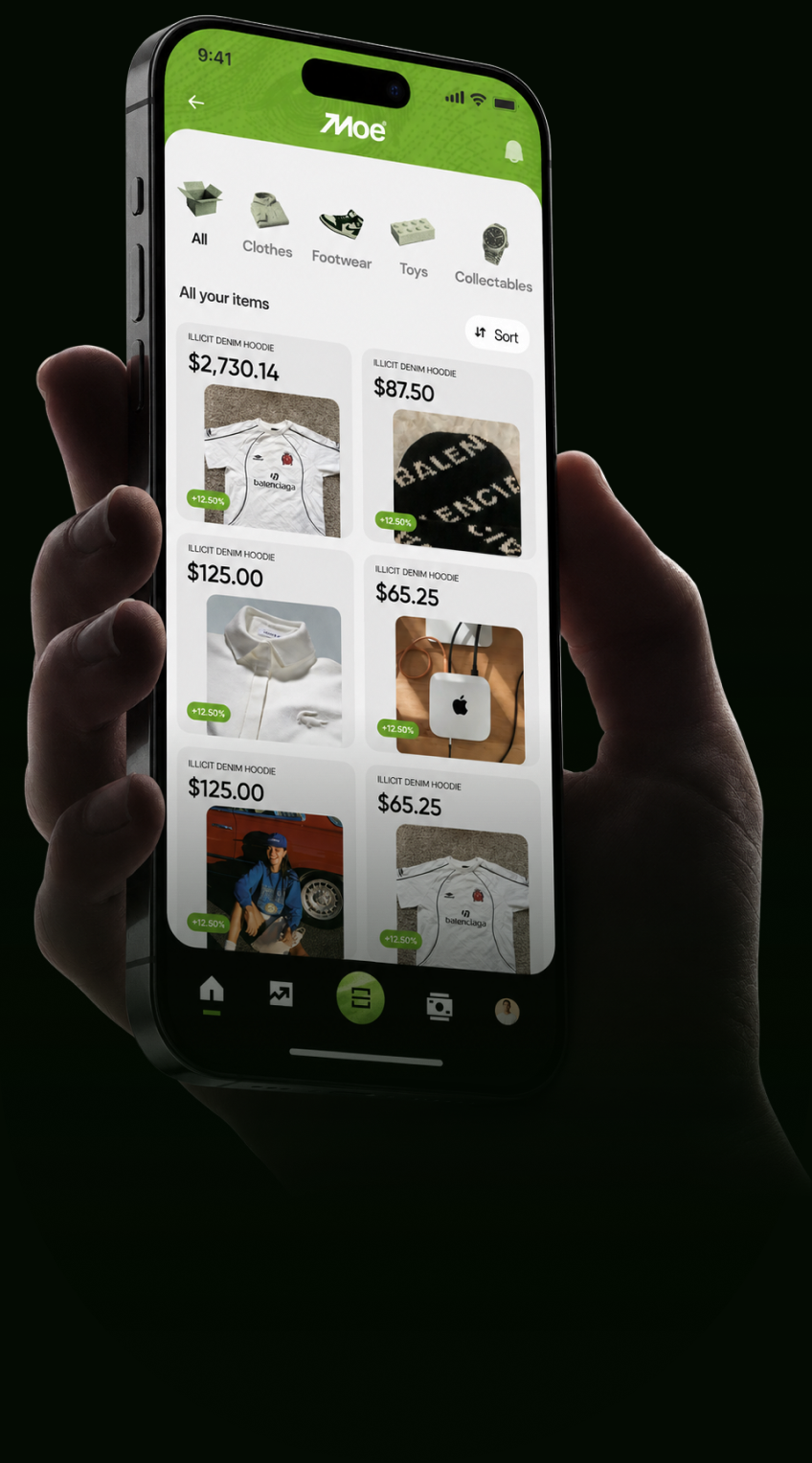
If you are not sure what you have, an app like Moe can identify the item from a photo and show current market value, which gives you a fast starting point before you dig into sold comps.
Where to sell a sports jersey
- eBay: the biggest audience for jerseys of every tier and era, and the best place to research sold prices.
- Mercari and Depop: good for everyday fan jerseys and trendy vintage pieces.
- Grailed: a strong fit for vintage and streetwear-style jerseys.
- Facebook Marketplace: easy local sales with no shipping, best for common jerseys.
- Auction houses: for documented game-worn or high-end signed jerseys, houses like Goldin, Heritage and Sotheby's reach serious collectors.
Listing on several sites at once gets more eyes on your jersey. For a full breakdown of fees and audiences, read our guide to the best places to sell collectibles online.
Tips for selling jerseys
- Photograph the front, back, collar logo, jock tag, inside neck labels, any holograms and close-ups of the stitching. Buyers look for the same things you just checked.
- Give flat measurements (pit to pit and length). Vintage sizing often runs large and tags can be misleading.
- Name the tier clearly in your title. Calling a Game jersey "authentic" will lead to returns and bad feedback.
- Disclose every flaw. Honest listings sell faster and avoid disputes.
- Cross-list to reach more buyers. Moe can cross-list to multiple marketplaces and keep buyer messages in one place.
Frequently asked questions
How can I tell if my NFL jersey is real?
Check the collar shield for crisp, straight detail, look for clean stitching or sharp printing that matches the tier, and compare the jock tag, inside labels and fonts with a known-real jersey of the same season. A very low price for an Elite jersey is a common sign of a fake.
What is the difference between an authentic and a replica jersey?
Replica or fan jerseys usually have printed names and numbers and a looser fit. Authentic or on-field versions use stitched twill lettering, performance fabric and a closer athletic fit. Both can be real licensed products.
Are fake jerseys worth anything?
Not to collectors. Counterfeit jerseys have little resale value, and many marketplaces prohibit selling them. If you find out a jersey is fake, keep it for personal wear.
How much is a game-worn jersey worth?
It depends on the player, the game and the proof. Documented game-worn jerseys from stars can sell for thousands or far more, and photo-matched jerseys of legends have sold for millions. Without documentation, buyers treat it like a regular jersey.
Do signed jerseys need a certificate of authenticity?
To get full value, yes. Buyers want authentication from a respected third-party company or a league program. A signature without reliable authentication can actually make a jersey harder to sell.
Are old Champion or Starter jerseys valuable?
Some are. Original 1990s pieces for popular players, defunct teams or short-lived designs can sell well in good condition. Common players and worn-out pieces usually sell for modest amounts, so check sold listings for your exact jersey.
Scan it with Moe to get a current value, then list it on multiple marketplaces at once.
Get Moe