

 Download on iOS

Where to Sell Collectibles Online: eBay vs. Mercari vs. Facebook Marketplace vs. Whatnot
eBay, Mercari, Facebook Marketplace and Whatnot each fit different items. Compare fees, buyers and effort, and learn when to cross-list.
Quick answer: eBay is the best all-around place to sell collectibles online because it has the most buyers and the deepest sold-price history. Mercari is simple and good for mid-priced items. Facebook Marketplace works best for bulky or local sales where you skip shipping. Whatnot is the pick for fast-moving categories like trading cards, toys and sneakers, where live auctions drive bidding. Many sellers list on more than one.
You found something good. Now you have to decide where to sell it, and every marketplace claims to be the best. The truth is each one fits a different kind of item and a different kind of seller. This guide compares eBay, Mercari, Facebook Marketplace and Whatnot on buyers, fees, effort and risk, so you can match each item to the right place.
Before you pick a marketplace, answer three quick questions about what you are selling:
- How niche is it? A rare variant figure or a specific vintage pattern needs a big pool of searching buyers. A common item sells almost anywhere.
- How easy is it to ship? Cards and small toys ship cheaply. Furniture, framed art and big lots are easier to sell locally.
- How much is it worth? Low-value items need low fees and low effort. High-value items need buyer trust, good photos and protection for you.
Your answers usually point to one or two platforms right away. If you are not sure what the item is worth yet, sort that out first. Our guide on valuing action figures walks through the same research steps you can use for most collectibles.
eBay: the biggest audience and the best price data
eBay is still the default for collectibles. It has buyers searching for very specific things, like a certain year, variant or pattern, and it has years of sold listings you can use to price.
What it costs: eBay gives most sellers 250 listings a month with no insertion fee. After that, the basic insertion fee is $0.35 per listing. When an item sells, eBay charges a final value fee on the total amount of the sale. For most categories that is 13.6% on the first $7,500. A few collectible categories, including sports trading cards, non-sport trading cards, collectible card games, comic books and coins, use a lower 13.25% rate. eBay also adds a per-order fee of $0.30 on orders of $10 or less and $0.40 on orders over $10.
Best for:
- Niche and high-value pieces where you need the widest search reach
- Items buyers look up by exact name, number or variant
- Auctions, when you have something rare and want buyers to set the price
Watch out for: Fees add up on cheap items, and competition is heavy for common ones. Good photos and an accurate title matter more here than anywhere else.
Mercari: simple listing for everyday collectibles
Mercari is built around quick phone listings and fixed prices. Buyers browse casually and make offers, so it suits mid-priced items that do not need an expert audience.
What it costs: Mercari charges a 10% selling fee on the item price plus any shipping the buyer pays. That has applied to new and updated listings since January 6, 2025. Mercari does not list a separate payment processing fee for sellers. Cashing out by direct deposit is free, while Instant Pay costs $3 per cash-out.
Best for:
- Toys, figures, games and pop culture items in the $15 to $150 range
- Sellers who want a quick listing flow without auction strategy
- Items that ship easily with a prepaid label
Watch out for: Offers come in low, so build a little room into your price. Mercari also charges extra if a package is packed badly or the label is underpaid, so weigh and measure carefully.
Facebook Marketplace: local buyers and no shipping
Facebook Marketplace shines for items that are a pain to ship. Think furniture, big lots, vintage signs, framed posters and boxes of mixed collectibles. Buyers come to you, look the item over and pay on the spot.
What it costs: When a buyer pays you in person, the sale happens outside Facebook's checkout, so Facebook does not take a cut. Shipped orders that go through Facebook's checkout carry a selling fee. Check Meta's current rate in the Marketplace help pages before you price a shipped item, since it has changed over time.
Best for:
- Bulky, fragile or heavy items
- Bundles and lots you want gone quickly
- Common collectibles where local demand is strong
Watch out for: Expect lots of "Is this still available?" messages and some no-shows. Meet in a public place, take cash or an instant payment you trust, and skip anyone who asks to pay by check or to ship before paying.
Whatnot: live auctions for fast-moving categories
Whatnot is a livestream shopping app. Sellers go live from a phone and run auctions or fixed-price sales while buyers watch, chat and bid. It is strongest in categories with active communities, like trading cards, sports cards, toys, sneakers and comics.
What it costs: Whatnot lists a seller commission of up to 8%, which varies by category and country, plus a payment processing fee of 2.9% of the total order value and $0.30 per transaction. There are no signup or monthly fees. Whatnot releases payment once the buyer receives the order.
Best for:
- Sellers with steady inventory in one category
- Cards, packs, figures and other items that sell well in quick runs
- People comfortable talking on camera
Watch out for: Live auctions can start low, so a single item can sell under value if few people are watching. Whatnot works best once you have a following and enough stock to run regular shows.
Fees side by side
Here is the quick version, using each platform's own published rates at the time of writing:
- eBay: 13.6% final value fee in most categories (13.25% for trading cards, comics and coins) on the first $7,500, plus $0.30 or $0.40 per order.
- Mercari: 10% of the item price plus buyer-paid shipping.
- Facebook Marketplace: No Facebook fee on in-person cash sales. Shipped checkout orders carry a selling fee.
- Whatnot: Up to 8% commission plus 2.9% and $0.30 for processing.
Lower fees do not always mean more money in your pocket. An item that sells for $120 on eBay can beat a $90 local sale even after fees. Compare what you would actually net, not just the percentage.
Price from sold listings, then list in more than one place
Whatever platform you choose, price from what items actually sold for, not what sellers are asking. Asking prices are wishes. Sold prices are the market. On eBay, filter your search results to show sold items. On Mercari, filter to sold listings too. Look for matches in the same condition, with the same accessories or box, sold in the last few months.
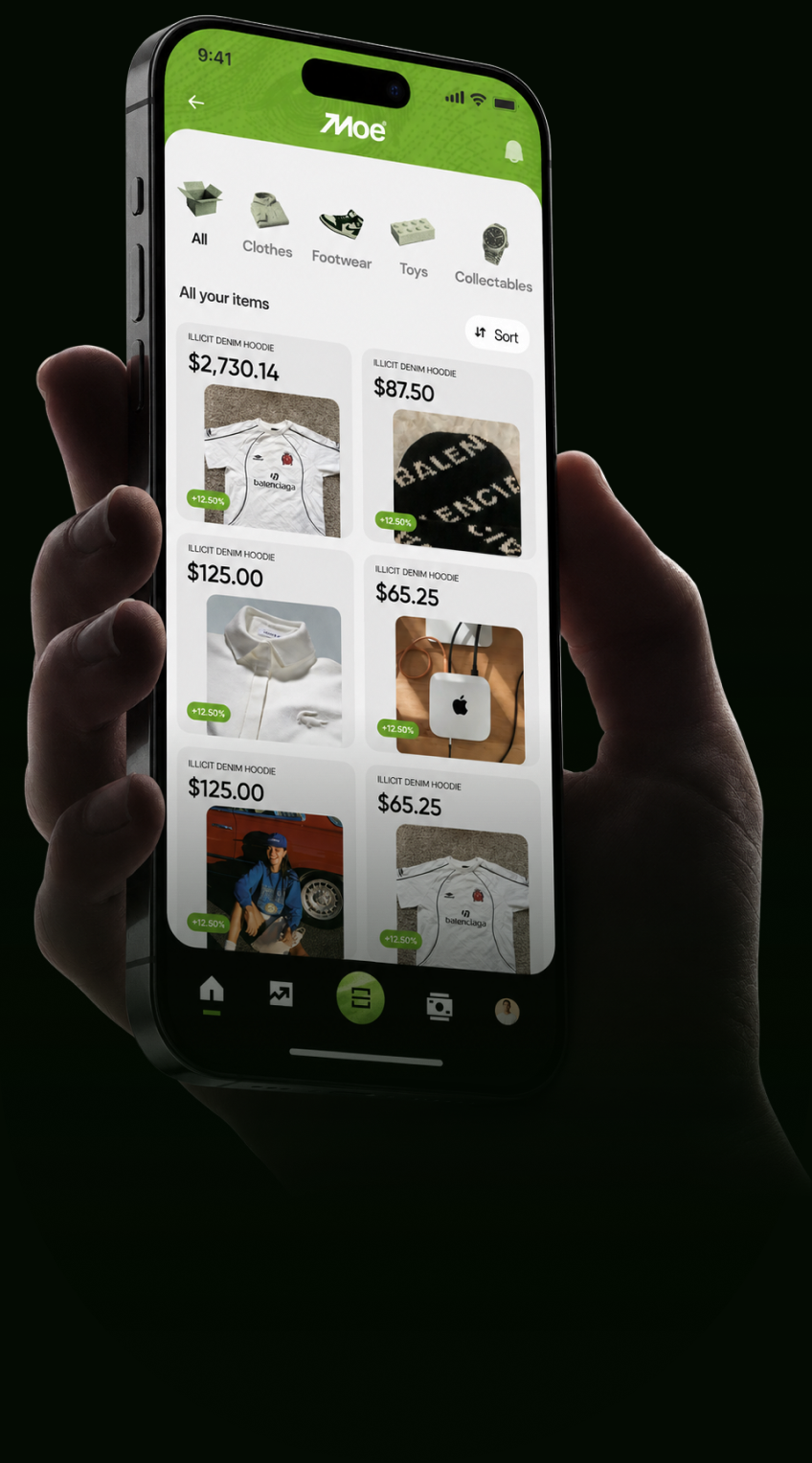
A fast shortcut is to scan the item with Moe. It identifies the item from a photo and shows its current market value, so you can see a realistic range before you write a single listing.
Next, think about listing in more than one place. Cross-listing puts the same item in front of more buyers, and the first good offer wins. The catch is upkeep. You have to end the other listings the moment something sells, or you risk selling one item twice. That is why many resellers use a cross-listing tool. Moe can post one listing to several marketplaces and keep buyer messages in one inbox, which cuts down on double sales and missed offers.
Tips to sell faster on any platform
- Shoot clean photos. Use daylight, a plain background and close-ups of marks, tags, flaws and serial numbers.
- Write searchable titles. Lead with brand, line, character or model, year and condition. Skip filler words.
- Be honest about condition. Show every flaw. Clear listings get fewer returns and better feedback.
- Pack like it is fragile. Sleeve and top-load cards, box figures inside a box, and use bubble wrap generously.
- Bundle the small stuff. Low-value items often sell better as a themed lot than one at a time.
- Answer fast. Quick replies turn browsers into buyers on every platform.
If you are still building inventory, our list of thrift store finds that resell well is a good place to start.
Frequently asked questions
What is the best website to sell collectibles?
For most collectibles, eBay is the best single place because it has the largest audience of buyers searching for specific items and the deepest sold-price history. Whatnot is strong for cards and toys sold in live auctions, Mercari is easy for mid-priced items, and Facebook Marketplace is best for local, bulky sales.
Is it better to sell on eBay or Mercari?
eBay usually gets higher prices on rare and niche items because more serious collectors shop there. Mercari's 10% fee is simpler and lower than eBay's rate in most categories, and listing is quick. Many sellers list everyday items on Mercari and save rare pieces for eBay, or list on both.
Does Facebook Marketplace charge a fee to sell?
Not on in-person sales where the buyer pays you directly, because the money never goes through Facebook. Shipped orders paid through Facebook's checkout do carry a selling fee, so check Meta's current rate before you price a shipped item.
How much does Whatnot take from sellers?
Whatnot lists a commission of up to 8%, depending on category and country, plus a payment processing fee of 2.9% of the order total and $0.30 per transaction. There are no signup or monthly fees.
Can I sell the same item on more than one site?
Yes. Cross-listing is common and helps an item sell faster. Just remove the other listings as soon as it sells so you do not sell it twice. A cross-listing tool makes that much easier.
How do I know what price to ask for my collectible?
Look up recent sold prices for the same item in the same condition, not current asking prices. Filter eBay or Mercari search results to sold items, or scan the item with an app that shows current market value.
Scan it with Moe to get a current value, then list it on multiple marketplaces at once.
Get Moe