




 Download on iOS

How to Price Used Items to Sell: Using Sold Comps, Not Asking Prices
Asking prices are wishes. Sold prices are proof. Here is how to find sold comps, read them well and turn them into a price that sells and still leaves you a profit.
Quick answer: Price used items from sold comps, not asking prices. Search the exact item, filter to sold listings, and look at what the closest matches actually sold for in the last few months. Take the middle of that range, adjust for condition and completeness, and check that the number still leaves you a profit after fees and shipping.
Pricing is where a lot of resellers lose money without noticing. You find a great item, look it up, see a few listings at a big number, and price to match. Then it sits for weeks. The problem is that an asking price is only a wish. A sold price is proof that a real buyer paid it. Once you price from sold comps, your listings move faster and your profit gets easier to predict.
What sold comps are and why they beat asking prices
A "comp" is a comparable sale: the same item, in similar condition, that recently sold. Sold comps tell you three things an active listing can't:
- What buyers will actually pay. Anyone can list a common item at a sky-high price. Only a sale shows real demand.
- How often it sells. Ten sales last month means a healthy market. One sale in three months means you may wait a while.
- Where the price floor is. The lowest recent sales show how far the price can drop when sellers get impatient.
Active listings are still useful, just for a different job. They show your competition. If twenty people are listing the same thing below your target price, you need a sharper price or a better listing to stand out.
How to find sold prices on eBay
eBay is the easiest place to pull sold data because it shows it right in search.
- Search for your item using the most specific words you can: brand, model, size, color and any model number.
- On desktop, check the Sold Items box in the filters on the left side of the results. In the eBay app, tap Filter, then find the sold items option.
- Read the results. Prices shown in green are completed sales.
Two details trip people up. First, regular search only shows sales from roughly the last 90 days. Second, when a seller accepted a Best Offer, the listing price is often shown crossed out with "Best offer" under it. That means the item sold for less than the number you see, so don't treat it as the real sale price.
If you need more history, eBay's Product Research tool (formerly Terapeak) is free for sellers with access to Seller Hub. You'll find it under the Research tab. It covers about three years of eBay sales and shows average sold price, the sold price range, average shipping cost and sell-through rate. It also shows the actual price when a Best Offer was accepted, which fixes the crossed-out price problem.
How to read your comps like a pro
Pulling sold listings is the easy part. Reading them well is what makes you money.
Match the item exactly
Filter out anything that isn't your item. A different size, color, edition or model year can change the price a lot. If your search returns a mix, add more detail to the search terms until the results line up with what you're holding.
Match the condition
New with tags, used with box, and used without box are three different markets. Compare your item to sales in the same condition. If you only find sales in better condition, price below them.
Check completeness
Original box, accessories, manuals, cables, dust bags and extra parts all matter. A console with controllers and cables sells for more than a bare unit. A sneaker with its original box usually beats one without.
Ignore the outliers
Throw out the one sale that went for twice the norm and the one that went for almost nothing. Those are often auction flukes, mislabeled listings or bundles. Look for the cluster where most sales land. That cluster is your real market price.
Look at the trend
Sort sold results by date. If recent sales are lower than older ones, the price is sliding and you should price toward the low end or sell soon. If recent sales are climbing, you can afford to be patient.
Turn comps into a listing price
Once you have a clean set of comps, setting a price takes a few minutes.
- Find the middle. Look at your five to ten best matches and find the typical sale price.
- Adjust for your item. Go up for better condition or extras. Go down for flaws, missing parts or a weaker listing.
- Decide on speed. Price at or just below the middle if you want a quick sale. Price a bit higher and wait if the item sells often and you're in no rush.
- Leave room for offers. On platforms where buyers make offers, list a little above your target so you can accept a reasonable offer and still hit your number.
- Do the profit math. Subtract platform fees, shipping and what you paid. If the leftover isn't worth your time, rethink the price or the platform.
Fees and shipping vary by platform and category, so check the current fee page for the marketplace you sell on before you lock in a price. A price that looks great on paper can shrink fast once fees and postage come out.
Check comps beyond eBay
eBay has the deepest public sold data, but your buyer might be somewhere else. Clothing, sneakers, collectibles and local pickup items can each sell for different amounts on different apps. If a marketplace you use lets you filter search results to sold items, use it, and compare those numbers with eBay before you price.
For heavy or fragile items, local selling can change the math. A piece of furniture or a big stereo might sell for less on a local app but still net you more because you skip shipping. Our guide on where to sell collectibles online breaks down which platforms fit which kinds of items.
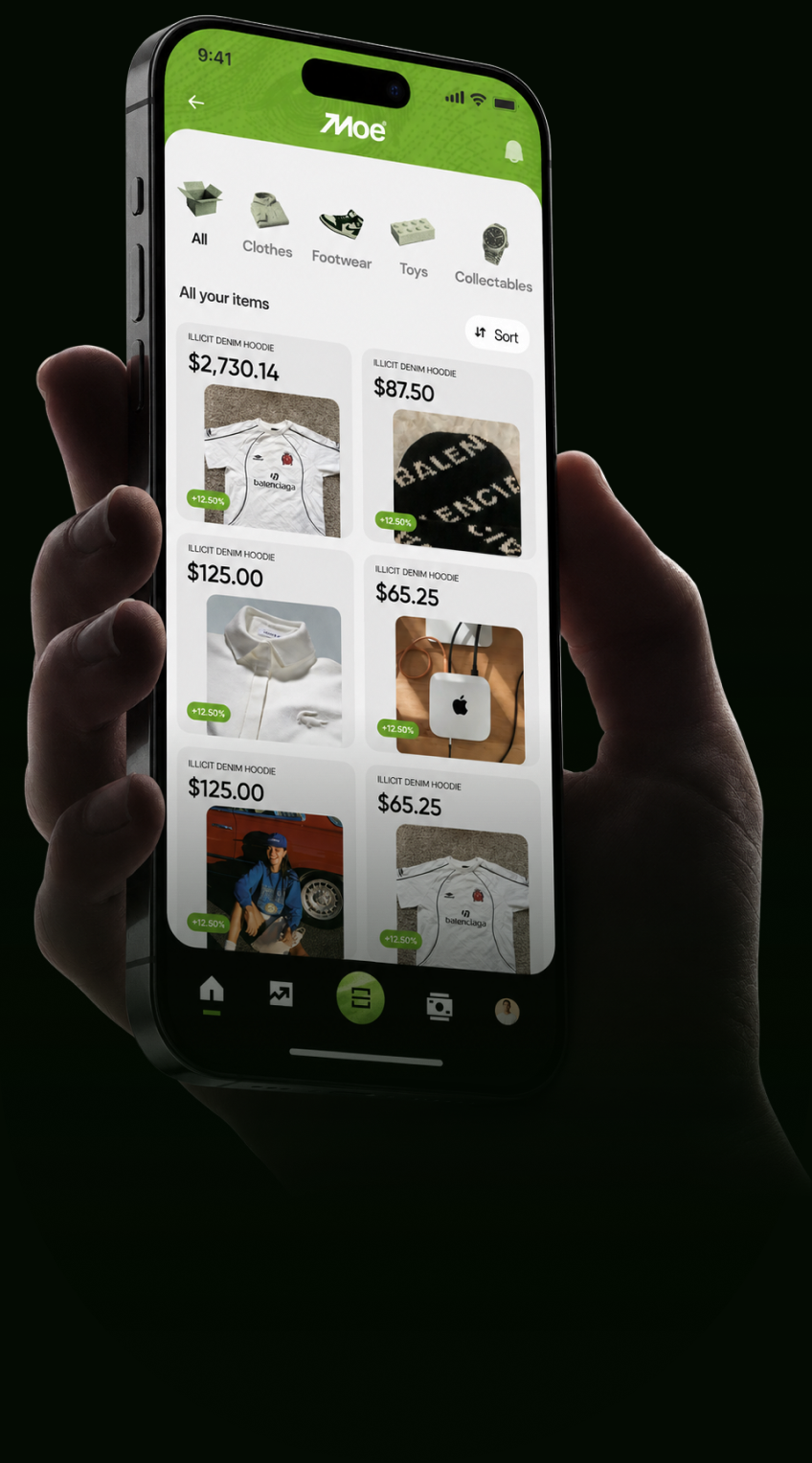
If you list on several apps at once, a tool like Moe can identify the item from a photo, show its current market value and cross-list it to multiple marketplaces, with buyer messages in one place. That saves you from pricing and posting the same item five separate times.
Pricing tips that save you money
- Look up comps before you buy. At the thrift store or estate sale, a quick sold search tells you whether an item is worth the cart space. Our list of what to look for at thrift stores is a good place to start.
- Don't price from memory. Markets move. A price you saw six months ago may be stale.
- Revisit stale listings. If something hasn't sold in a few weeks, pull fresh comps. You may be priced above the market, or your photos and title may need work.
- Watch for hype cycles. Prices for trending items can spike and fall quickly. Sell into the spike if you can.
- Keep notes. Track what you paid, what you listed at and what it sold for. Over time you'll learn which categories are worth your effort.
Frequently asked questions
How do I know what price to sell my used item for?
Search for the exact item and filter to sold listings. Compare the sales that match your item's condition and completeness, find the typical price, then adjust up or down for your item's details.
Why shouldn't I use asking prices to price items?
Asking prices show what sellers hope to get, not what buyers paid. Many listings sit unsold for months because they're overpriced. Sold prices show the real market.
How far back can I see sold items on eBay?
Regular eBay search shows sold items from about the last 90 days. For older data, eBay's Product Research tool in Seller Hub covers about three years of sales and is free for sellers with Seller Hub access.
What does a crossed-out price on an eBay sold listing mean?
It usually means the seller accepted a Best Offer, so the item sold for less than the price shown. eBay's Product Research tool shows the actual accepted price.
How many comps do I need to price an item?
Five to ten close matches is a good target. If you can only find one or two sales, the market is thin, so price carefully and expect it to take longer to sell.
Should I price high and wait or price low and sell fast?
It depends on how often the item sells and how much you value your time and space. For items that sell often, pricing near the middle of recent sales usually moves them quickly. For rare items with few comps, you can price higher and be patient.
Scan it with Moe to get a current value, then list it on multiple marketplaces at once.
Get Moe