



 Download on iOS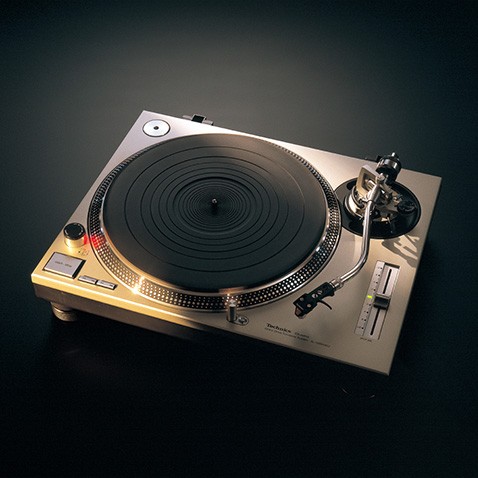
How to Price and Sell Vintage Stereo Receivers and Turntables
Some vintage receivers and turntables sell for serious money, and some barely cover shipping. Here's how to identify yours, check real sold prices and sell it right.
Quick answer: A vintage receiver is worth what working examples of the same model have actually sold for recently. Brand, model, power output, working condition and cosmetics drive the price. 1970s receivers from Marantz, Pioneer, Sansui, Kenwood, McIntosh and similar brands draw the most interest, and a clean, fully working unit can sell for many times more than one that only powers on.
That old silver receiver in the garage, or the turntable on top of it, could be a nice payday. It could also be a common model that sells for less than the cost to ship it. The good news is that you can figure out which one you have in about ten minutes. Here's how to identify your gear, what buyers pay extra for, and where to sell it.
How to identify your receiver or turntable
Start with the basics. Every piece of gear you want to price needs a brand and an exact model number.
- Check the front panel first. Most 1970s receivers print the brand and model right on the faceplate, like "Marantz 2270" or "Pioneer SX-980."
- Check the back panel. If the front only shows a brand, the model number is usually on a metal plate or sticker near the speaker terminals or power cord, along with a serial number.
- For turntables, look at the plinth and the label under the platter or on the base. Technics, for example, prints the model on the deck, and the SL-1200 line has several versions with different values.
- Write down any letter suffix. A "B" or "MK2" at the end of a model name can mean a different version with a different price. The Marantz 2285B and the Technics SL-1200MK2 are good examples.
Once you have the exact model, search it with words like "receiver" or "turntable" and look at photos to confirm it matches yours. Pay attention to the knobs, meters and faceplate color, since some models came in more than one finish.
What makes vintage audio gear valuable
Collectors tend to agree that the 1970s were the peak years for stereo receivers. That's when brands like Pioneer, Marantz, Sansui and Kenwood built heavy, overbuilt units with big tuning dials and glowing meters. Within that era, a few things move the price up or down.
Brand and model
Some models have a following of their own. The Marantz 2270 is a well-known example, loved for its blue dial lighting and brushed aluminum faceplate. Higher-powered Marantz models like the 2285B and 2385 also get attention. Sansui's G-9000, Pioneer's SX-980 and SX-1280, and the Harman Kardon 430 come up often when collectors talk about receivers they want. On the turntable side, the Technics SL-1200 (especially the MK2 and earlier), Thorens TD-124, Garrard 301, Linn Sondek LP12 and Acoustic Research XA all have strong reputations.
Power and size
In general, bigger and more powerful flagship receivers bring more than the smaller models in the same line. A 10-watt Marantz and a 185-watt Marantz from the same decade are very different items to a buyer. That said, there's real demand for mid-size models too, because many buyers want the vintage look and sound without a huge, heavy unit.
Working condition
This is the biggest factor you control. Buyers want to know that every function works. Before you price anything, test it:
- Do both channels play cleanly through speakers or headphones?
- Do the volume, balance and tone knobs turn without crackling or cutting out?
- Do all the inputs work (phono, aux, tape) and does the tuner pull in stations?
- Do the dial lamps and meter lights work, or are some burned out?
- For turntables, does the platter hold speed, and do the tonearm and auto-return functions work?
Scratchy knobs, a dead channel or dark dial lights all lower the price. A unit that has been professionally cleaned and serviced, with paperwork to prove it, usually sells for more and sells faster, because the buyer isn't taking on repair risk.
Cosmetics
Buyers look closely at faceplates, knobs and wood cases. Deep scratches, dents, missing knobs, water stains or pitted metal all hurt value, because they can point to moisture damage or rough storage. Original wood cases, original knobs and a clean faceplate help a lot.
How to check what your gear is worth
Asking prices are wishes. Sold prices are facts. A receiver listed for a big number for six months has told you only what the seller hopes to get.
- Search eBay sold listings. Search your exact model, then check the "Sold Items" filter in the left sidebar. Regular eBay search shows roughly the last 90 days of sold results, which is a good snapshot of the current market.
- Match condition. Separate the sold listings into fully working, serviced units and "for parts or repair" units. The gap between those two groups is often huge, and you need to compare your unit to the right group.
- Check Reverb's price history. Reverb is a music gear marketplace with a lot of vintage audio. Look at completed sales for your model, not current listings.
- Look at several sales, not one. One high sale can be a fluke. Five or ten similar sales give you a real range.
If you'd rather skip the manual searching, you can snap a photo with Moe to identify the model and see current market value in one step. It's a quick way to sort the keepers from the common stuff when you're looking at a whole shelf of gear.
Where to sell vintage receivers and turntables
Each marketplace has tradeoffs. Weight is a big deal here, since many receivers are heavy and fragile.
- eBay: The largest audience and the deepest sold-price data. Good for mid-range and high-end pieces that are worth the cost and effort of careful shipping.
- Reverb: Built for music and audio gear, so buyers there know what they're looking at. Reverb charges a 5% selling fee plus a separate payment processing fee, so factor both into your price.
- Facebook Marketplace and local listings: Great for heavy units, common models and anything you'd rather not ship. Buyers can come test it in person, which helps with older gear.
- Local hi-fi and vintage audio shops: Some buy outright or take consignment. You'll usually get less than a private sale, but it's fast and easy.
Listing on more than one of these at once gets your gear in front of more buyers. If you go that route, a cross-listing tool like Moe lets you post once to several marketplaces and keep buyer messages in one place, so you don't double-sell the same receiver.
Tips for getting the best price
- Show it working. Take a short video of the unit playing music, with the dial lit and the meters moving. That single video answers most buyer questions.
- Photograph everything. Shoot the front, back, top, the model plate, every knob, and any flaws up close. If you can, include a photo of the inside with the cover off. Buyers like to see a clean chassis without dust, pet hair or corrosion.
- Be honest in the description. List every known issue, like a scratchy volume knob or a dead lamp. Clear disclosure prevents returns and bad feedback.
- Don't fake a restoration. If it hasn't been serviced, say "untested" or "working, not serviced." Only call it restored if a tech actually did the work.
- Pack like it's glass. Remove or secure the turntable platter and tonearm, double-box heavy receivers with plenty of padding, and protect the knobs and faceplate. Shipping damage is the most common way these sales go wrong.
- Know when to sell as-is. Servicing costs money. For a common model, selling as-is at a fair price may beat paying for repairs. For a sought-after model, a professional service can be worth it.
If you're hunting for gear to flip, receivers and turntables are classic thrift-store finds. Our guide to what to look for at thrift stores covers other items that tend to resell well.
Frequently asked questions
How much is my vintage receiver worth?
It depends on the exact model, whether it fully works and how clean it is. Search the model on eBay with the "Sold Items" filter on, compare only units in similar condition, and use the range of recent sales as your guide.
Which vintage receivers are worth the most money?
1970s flagship and upper-mid models from brands like Marantz, Pioneer, Sansui, Kenwood and McIntosh tend to bring the most. Models like the Marantz 2270, Pioneer SX-1280 and Sansui G-9000 are well known among collectors.
Is a vintage receiver that doesn't work worth anything?
Often, yes. Non-working units from desirable brands still sell to repair techs and hobbyists for parts or restoration. Expect much less than a working unit, and list it clearly as "for parts or repair."
Should I get my receiver serviced before selling it?
For a sought-after model, professional cleaning and servicing can raise the price and make it sell faster. For a common model, the repair bill may cost more than it adds, so selling as-is is often the better move.
Where is the best place to sell a vintage turntable?
eBay and Reverb reach the most audio buyers, while Facebook Marketplace works well for local sales without shipping. Many sellers list on more than one site at the same time.
Are old Technics turntables worth money?
Many are. The Technics SL-1200 series, launched in 1972, is one of the best-known turntables ever made, and the MK2 version from 1979 became a DJ standard. Working, clean examples sell well, so check sold listings for your exact version.
Scan it with Moe to get a current value, then list it on multiple marketplaces at once.
Get Moe