





 Download on iOS
How to Identify Valuable Art Pottery by Its Marks
The mark on the bottom of a vase can tell you who made it, when, and whether it is worth a closer look. Here is how to read the marks from Rookwood, Roseville, Weller and Van Briggle.
Quick answer: Flip the piece over and look at the bottom. Most valuable American art pottery carries a maker's mark, and many marks also hide a date, a shape number and sometimes an artist's initials. Learn to tell incised, impressed, ink-stamped and molded marks apart, match the mark to a reference like Kovel's, then check recent sold prices for that exact maker, pattern and size.
Art pottery is one of the best things to find on a thrift store shelf. A vase can sit there for a few dollars because nobody turned it over. The mark on the bottom is your best clue to who made it, when it was made and whether it is worth a closer look. This guide shows you how to read those marks, using a few well-known American potteries as examples, and how to turn what you find into a real price.
What counts as art pottery?
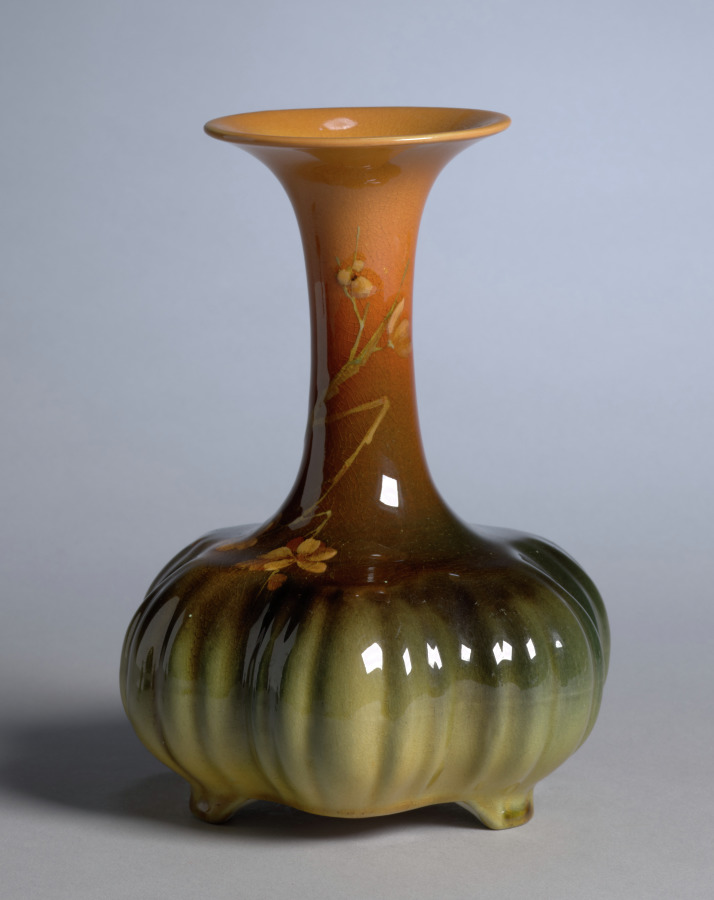
Art pottery usually means decorative pieces made by potteries that put design first, often in the late 1800s and early 1900s. Think vases, bowls and jardinieres with special glazes, molded flowers or hand-painted scenes. Names you will see often include Rookwood, Roseville, Weller and Van Briggle. Some pieces were decorated by hand and signed by the artist. Others were molded in large runs. Both can sell, but signed, hand-decorated work usually sits at the top of the market.
The four kinds of marks to know
Before you try to read a mark, figure out how it was made. That alone can tell you a lot.
- Incised. Scratched into the clay with a tool before firing. Artist signatures, initials and shape numbers are often incised. The lines look hand-drawn.
- Impressed. Pressed into the wet clay with a die. You can feel the letters sink in when you run a finger over them.
- Ink stamped or printed. Applied on top, usually in black, blue or another color. Ink marks can fade or wash off over the years.
- Molded or raised. Part of the mold itself, so the letters stand up from the surface.
Many potteries also used paper or foil labels. These often fell off long ago, which is why some genuine pieces have no mark at all. A missing mark does not mean a piece is fake. It just means you need to rely more on the shape, glaze and pattern.
Bring good light. A phone flashlight held at a low angle makes worn impressed marks much easier to read, and your phone's zoom helps with tiny numbers.
How to read marks from four big names
Rookwood: a built-in calendar
Rookwood, from Cincinnati, used one of the easiest dating systems in American pottery. Its main mark is a reversed R joined to a P. Starting in 1887, the company added one flame around the monogram each year, reaching 14 flames by 1900. After that, it kept the 14 flames and added a Roman numeral underneath for the year past 1900. A piece with 14 flames and XXII below it dates to 1922.
Below the date you may see a shape number followed by a letter from A to F for size, with A the largest. Artist initials or a cipher point to a hand-decorated piece, and signed pieces generally bring more. An X ground into the bottom marked a second that was not meant for sale, which usually lowers the value. Later Rookwood exists too. Pieces from the Mississippi years in the 1960s say Starkville, and work made under later owners uses different date styles, so read the whole mark before you get excited about the flames.
Roseville: marks changed by era
Roseville is one of the most common art pottery names you will find, and its marks shifted over time. Early Rozane lines used a round wafer mark. From 1923 some patterns got a blue ink stamp with a small v inside an R. Pieces made between 1927 and 1935 typically carried only paper or foil labels, so many from that stretch have no permanent mark. From 1936 the company used an impressed Roseville mark with shape number and size, and from 1940 it switched to the raised "Roseville USA" mark that most people picture.
Roseville is also one of the most faked names. Warning signs include a piece that feels too light, glaze colors that look muddy or uneven, lettering that does not match known marks and odd extras in the mark. One collector who studies reproductions points out that a "C" is not part of any real Roseville mark. When in doubt, compare your mark to a documented example of the same pattern.
Weller: many marks over many years
Weller started in Ohio in 1872, moved to Zanesville in 1882 and closed in 1948. Over that run it used a long list of marks: incised marks on early art lines, a half-circle seal on Louwelsa from about 1896, a block-letter WELLER die stamp into the 1920s, full and half kiln-shaped ink stamps in the 1920s, and a molded script reading "Weller Pottery Since 1872" on pieces made after 1935. Collectors note that the dates overlap and are not always consistent, so treat Weller marks as a range, not an exact year.
Van Briggle: dates, clay and the AA logo
Van Briggle, based in Colorado Springs, marks its pieces with a logo of two joined letter A's. Early pieces from 1900 to about 1907 often carry a full year incised on the bottom. "Colo. Springs" first appears in 1906, and "USA" points to 1922 or later. The company kept making pottery for decades, so later pieces with the same AA logo are common. The clay color on the unglazed base helps: dark clay suggests the 1910s, white clay generally means the 1930s to 1970, and buff clay shows up both in the 1920s and from 1970 on. No single clue settles it, so combine the mark, the script and the clay.
What makes a marked piece valuable?
A good mark gets you in the door. These are the things that decide the price:
- Maker and line. Some patterns and lines have far more collector demand than others from the same pottery.
- Hand work. An artist signature or cipher on a hand-decorated piece usually beats a molded production piece.
- Age. Early pieces from a pottery's peak years tend to sell better than late production.
- Condition. Chips, cracks, hairlines, crazing and old repairs all cut value. Check the rim and base closely and run a finger around the edge.
- Size and glaze. Larger pieces and strong, even glazes in desirable colors often bring more.
- Seconds marks. A factory mark showing a second, like Rookwood's ground X, usually lowers the price.
How to check what your piece is worth
Asking prices are wishes. Sold prices are what buyers actually paid. To get a real number:
- Identify it first. Write down the maker, pattern name, shape number and size from the mark. A reference like Kovel's New Dictionary of Marks or the Kovels.com marks database can help you match an unfamiliar mark.
- Search sold listings. On eBay, filter for sold items. Sites like WorthPoint also keep past sale records.
- Match exactly. Compare only pieces with the same pattern, shape, size and similar condition. A chipped vase and a perfect one are different items.
- Look at auction results. For signed or early pieces, check results from auction houses that hold art pottery sales.
If you want a faster start, you can snap a photo with Moe to identify the piece and see current market value, then confirm with sold comps.
Where to sell art pottery
- eBay. The biggest audience for marked American pottery, and the best place to see sold prices.
- Etsy. Works well for vintage decor buyers, especially for attractive pieces in good shape.
- Facebook Marketplace and local groups. Good for heavy or fragile pieces you would rather not ship.
- Auction houses. Worth a call for signed, early or rare pieces, where specialist buyers compete.
Pottery breaks easily, so pack every piece double-boxed with plenty of padding and photograph the mark clearly in your listing. Buyers want to see it. If you list on more than one site, Moe can cross-list your piece and keep buyer messages in one place.
Tips for thrift store hunting
- Pick up anything with a matte or drippy glaze, molded flowers or a hand-painted look, and turn it over.
- Do not skip unmarked pieces with the right look. Labels fall off.
- Learn the shapes and glazes of a few big names first. You will start spotting them across the aisle.
- Check condition before you buy. A crack can turn a great find into a decoration for your own shelf.
- Look for related finds in the same area. Our guides on what to look for at thrift stores and which Pyrex patterns are worth money cover more of the housewares aisle.
Frequently asked questions
How do I identify pottery marks on the bottom?
First decide whether the mark is incised, impressed, ink stamped or molded. Then note any names, logos, numbers and letters, and compare them with a marks reference like Kovel's or the Kovels.com database. Shape numbers and date codes can narrow down the maker and era.
How can I tell how old my Rookwood pottery is?
Count the flames around the reversed RP monogram. One flame was added each year from 1887 to 1900. After 1900, a Roman numeral under the 14 flames gives the years past 1900, so XXII means 1922.
Is unmarked pottery worth anything?
It can be. Many potteries used paper or foil labels that fell off over time. Roseville pieces from about 1927 to 1935, for example, often carried only labels. Identify unmarked pieces by shape, glaze and pattern, and compare them with documented examples.
How do I know if my Roseville is real?
Real Roseville has a solid weight and even glaze. Be wary of pieces that feel light, have muddy colors or show lettering that does not match known marks. A "C" in the mark is a known warning sign, since it is not part of any real Roseville mark.
What does the AA mark on pottery mean?
Two joined letter A's is the logo of Van Briggle Pottery in Colorado Springs. The company used it for over a century, so check for a date, the words "Colo. Springs" or "USA," and the clay color on the base to estimate the age.
Scan it with Moe to get a current value, then list it on multiple marketplaces at once.
Get Moe